Minds Europe Reveals Insights from Researcher Sessions
As part of the SMART Researchers project, Minds Europe organised a Researcher Questionnaire Session. The objective of the activity was to gather foundational insights that will support the development of the project’s capacity-building and certification strategy.
The questionnaire aimed to map the perceptions and competencies of Early-Stage Researchers (ESRs) against the ResearchComp framework and explored how institutional practices and policies align with the European Charter for Researchers.
Engaging Early-Stage Researchers
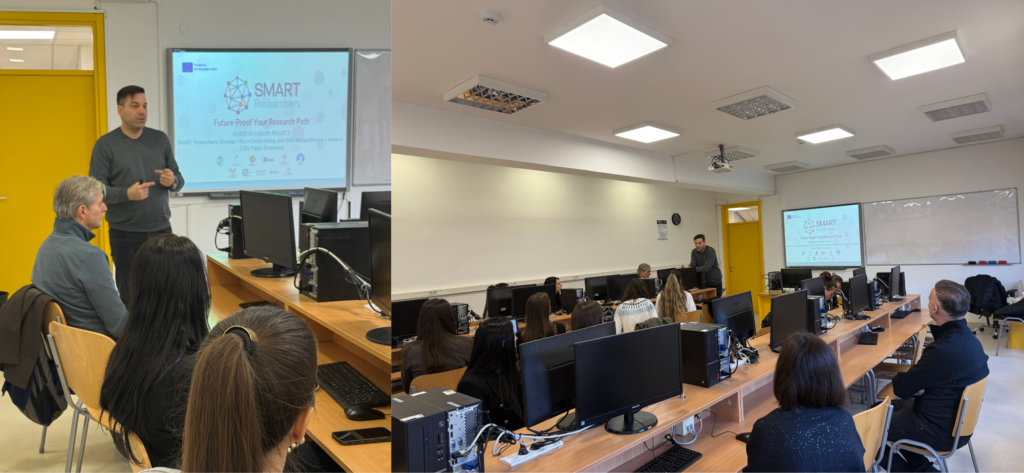
The Researcher Questionnaire Session was organised as an interactive workshop, bringing together researchers from different stages of their academic careers.
The respondent sample comprised 19 participants who completed the SMART Researchers Questionnaire. The group was predominantly composed of early-stage researchers (R1), with additional representation of recognized researchers (R2). This composition reflects a strong focus on the early and intermediate phases of research careers, which are particularly relevant for the project’s objectives.
Participants were mainly within the 25-39 age group, indicating a relatively young research workforce and highlighting the importance of targeted support mechanisms for career development and professional growth.
The workshop began with a short introduction to the SMART Researchers project, presenting its objectives, context, and relevance within the broader European research landscape. Particular attention was given to the European Charter for Researchers, which provided the policy framework for the session.
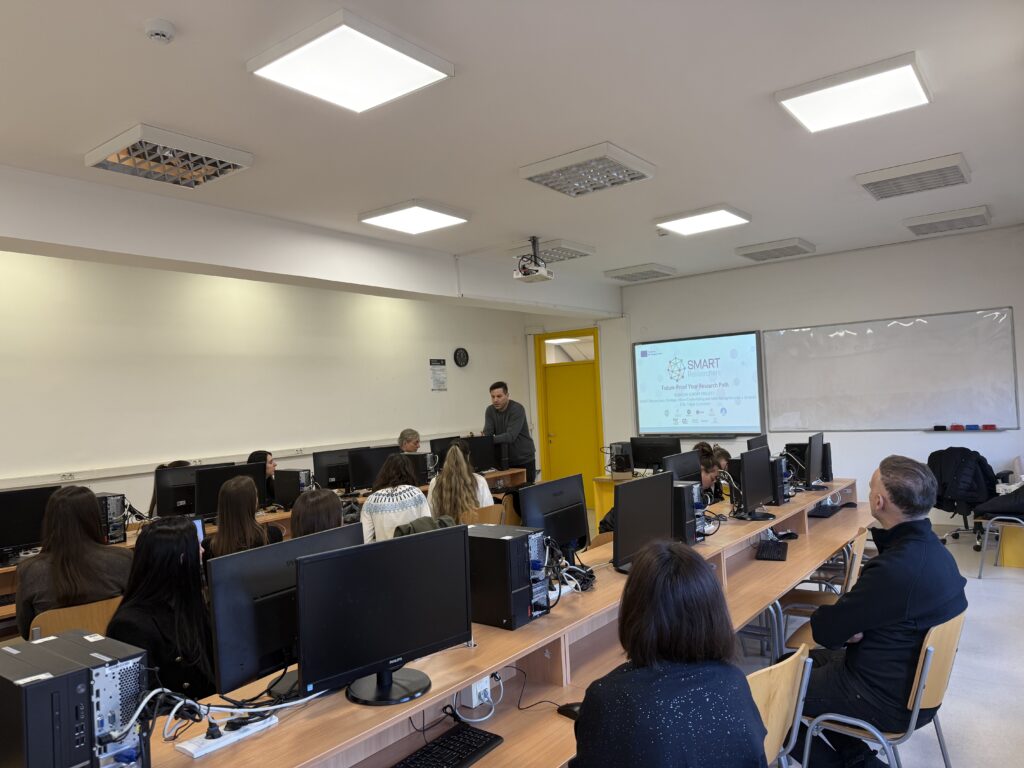
Participants were then introduced to the questionnaire structure, including an explanation of how the four pillars of the Charter are reflected in the survey sections. Each pillar was briefly outlined before participants proceeded to complete the questionnaire.
The questionnaire consisted primarily of Likert-scale questions, which participants completed individually on their computers. Facilitators were present to clarify questions when necessary. Respondents were informed that the personal information section was mandatory, while individual Likert-scale questions could be skipped if they were clearly not applicable.
The session concluded with an open reflection and discussion, where participants shared their impressions and comments related to the questionnaire and the principles of the European Charter for Researchers.
What We Learned
The questionnaire results provide an integrated picture of how researchers perceive both their working conditions and the institutional structures supporting their careers.
Across all four pillars of the European Charter for Researchers, a consistent pattern emerged. Researchers demonstrate a strong individual commitment to ethical, inclusive, and innovative research practices. High levels of awareness were reported in areas such as research ethics and integrity, sustainability, Open Science, and collaborative working relationships. Participants also expressed strong trust in supervisory relationships and a clear motivation for professional and career development.
Key Challenges:
– Gap between individual practices and institutional support: Strong researcher commitment exists, but institutional mechanisms remain limited or inconsistent.
– Reliance on informal arrangements: Mentoring, career guidance, training, and infrastructure are not yet fully institutionalised.
– Challenges for early-career researchers: Development opportunities depend heavily on employment stability, mentoring access, and clear career pathways.
– Policy-practice gaps: Differences exist between formal regulations and their implementation, including limited feedback in evaluation processes.
– Career sustainability issues: Short-term contracts, employment insecurity, and unclear progression pathways remain significant barriers.
Next Steps
The findings highlight the need to strengthen structured institutional support, including training, mentoring, and career guidance across all career stages. Improving transparency and consistency in recruitment, assessment, and promotion is key to building trust and fairness. Addressing career sustainability, especially for early-career and fixed-term researchers, is critical for talent retention and long-term excellence. Embedding Open Science, diversity, inclusion, and sustainability into institutional strategies will reinforce both individual practices and institutional capacity. These insights provide a solid foundation for targeted capacity-building, institutional improvements, and policy development that will feed SMART Researchers project activities.