SMART Researchers Report: What 261 Researchers Told Us About Institutional Research Career Practices
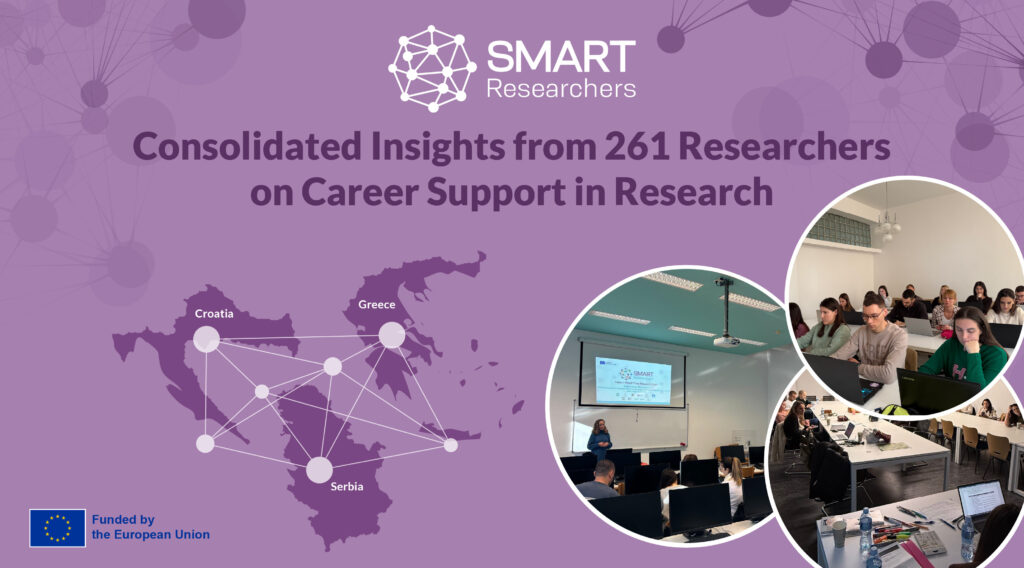
The SMART Researchers project has released new findings based on responses from 261 researchers, offering insights into how research careers are supported across institutions and their alignment with European Research Area (ERA) priorities and the European Charter for Researchers.
Led by Road HR, a consulting organisation specialising in human resources, the research was carried out in academic and non-academic partner institutions in Serbia, Croatia, and Greece.
The findings highlight shared strengths, key differences, and practical opportunities to further improve research career practices across institutions.
How we collected data
We used the SMART Researchers Questionnaire, which focuses on four key areas:
– Ethics, gender equality and open sciench
– Recruitment and career progression
– Working conditions
– Career development and support
Researchers rated statements on a 1-5 scale and shared some additional comments.
What the results show
Overall, results indicate moderate development across all areas, with clear room for improvement.
Ethics, Gender and Open Science (3.78)
Researchers understand ethical standards, gender equality and work-life balance quite well.
However, there is clear potential to further strengthen institutional support, particularly in areas such as training, clearer guidelines, and open science practices.
Recruitment and Career Progression (3.54)
Teamwork is increasingly recognised, which is positive.
But career paths that are not “traditional” (for example, moving between countries or sectors) are still not well valued. Many researchers also feel that hiring and promotion processes are not transparent enough.
Working Conditions (3.32)
This is the weakest area. Researchers appreciate flexibility and awareness of responsibilities. But they are concerned about job stability, salaries, and unclear rules.
Career Development (3.58)
Relationships with supervisors are generally good. The problem is at the institutional level, as there is not enough structured support, such as career guidance, training, or mentoring systems.
About SMART Researchers
The SMART Researchers project focuses on building stronger and more sustainable career support for early-stage researchers in Widening Countries. It promotes better HR practices in line with the European Framework for Research Careers and the European Charter for Researchers, with the goal of improving working conditions and supporting long-term career development.
The project also introduces tools such as micro-credentials and certification based on the ResearchComp framework, helping researchers develop and demonstrate the skills needed for flexible and evolving career paths. With a focus on green and digital transitions, SMART Researchers supports researchers in adapting to the changing demands of research and innovation in Europe.
The SMART Researchers Questionnaire marks an important step in this process. It provides a clear, evidence-based view of current practices from the researchers’ perspective. Together with the HR Audit, these findings form the basis for concrete Strategic Action Plans, aimed at driving real improvements in research careers across participating institutions.
Discover all about the project on the project website and social media channels (LinkedIn, Instagram, X, YouTube).