Evaluating Research Careers at UTH: Results from the SMART Questionnaire
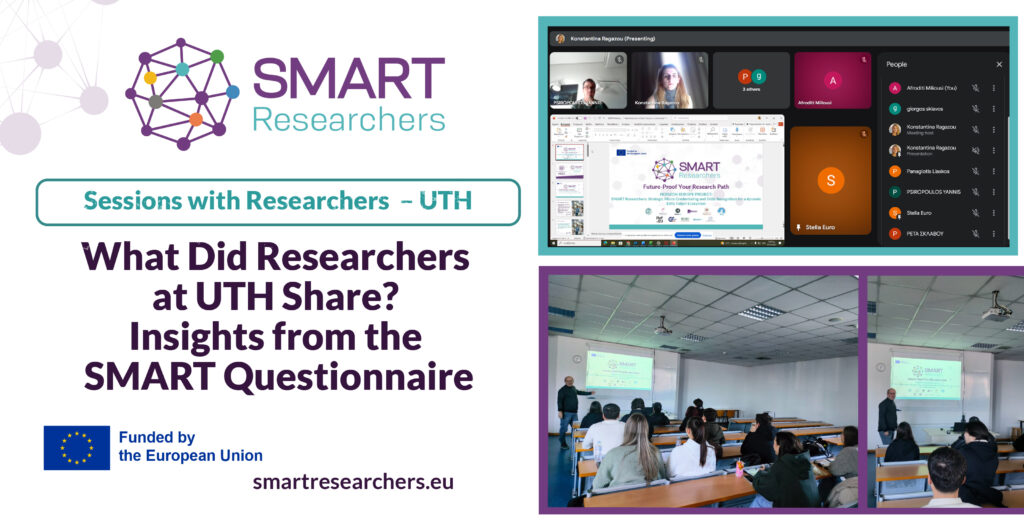
The SMART Researchers Questionnaire was carried out at the University of Thessaly (UTH) to better understand and evaluate institutional research career practices in alignment with European Research Area (ERA) priorities and the European Charter for Researchers. This article takes a closer look at how the sessions were conducted and outlines the next steps for strengthening research career development.
Engaging Early-Stage Researchers
At UTH, the data collection process brought researchers together through one in-person session and four online sessions, all facilitated by the project team. In total, 58 participants took part in the SMART Researchers Questionnaire, with the majority being early-stage researchers (R1). Most respondents were between 25 and 39 years old, representing a diverse range of departments across the university.
Each session combined individual reflection with interactive exchange. Participants completed the quantitative part of the questionnaire independently, while facilitators were on hand to guide and clarify when needed. Beyond the numbers, valuable qualitative insights emerged through open-ended questions and short group discussions, giving researchers the opportunity to share their experiences and perspectives.
What We Learned
The SMART Researchers Questionnaire revealed both strengths and areas for improvement at UTH. Researchers show strong awareness of ethical standards, flexible working, and positive relationships, yet institutional support and guidance remain limited. Here’s a closer look at the findings:
Strengths:
– High awareness of ethical standards, academic freedom, gender equality, and work-life balance.
– Strong individual understanding of legal obligations and encouragement for research accessible to society.
– Positive relationships with supervisors and colleagues.
– Flexible working conditions.
Areas for Improvement:
– Limited institutional training and guidance on research ethics, integrity, and Open Science practices.
– Researcher assessment relies too heavily on quantitative indicators like publication numbers.
– Career pathways and development opportunities lack transparency, predictability, and clear communication.
– Overall institutional support for researchers is weak.
Next Steps
The findings highlight how individual choices and dynamic research environments combine to shape career paths, revealing opportunities for smarter decision-making, greater satisfaction, and long-term adaptability.
At UTH, the priority should be to strengthen institutional support by offering clearer guidance on research ethics, integrity, Open Science, and transparency. Equally important is fostering open dissemination, raising awareness of intellectual property, and promoting societal engagement. Finally, making recruitment, assessment, and career progression more transparent, providing constructive feedback, and using balanced evaluation criteria will help build a research environment that is fair, supportive, and ready for the future.