Voices of early-stage researchers: Antonela Alvir
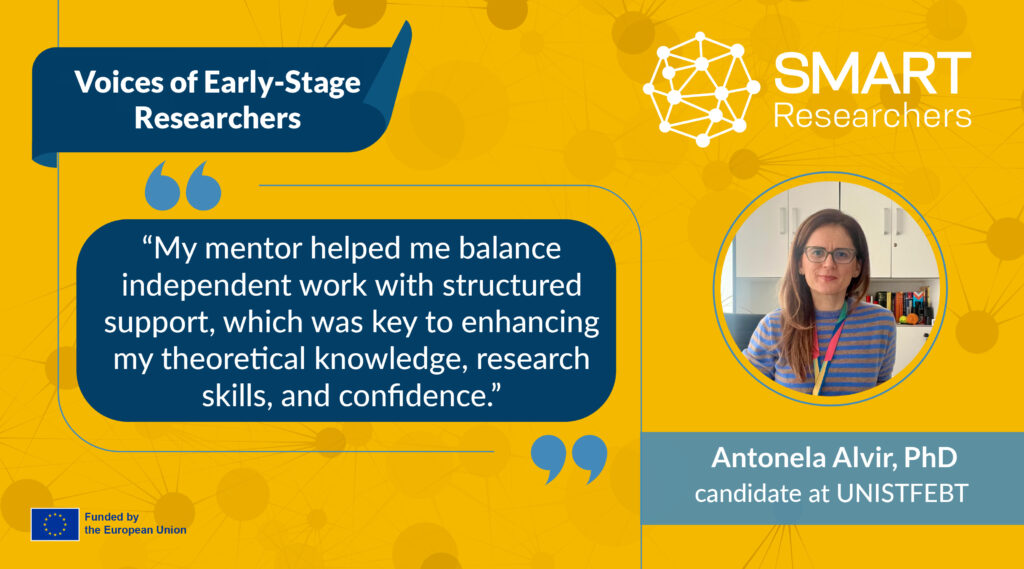
Antonela Alvir is a self-employed entrepreneur and PhD candidate at the University of Split, Faculty of Economics, Business and Tourism. She is currently in the final stage of her doctoral studies. After completing her empirical study and presenting the findings to the Doctoral Committee in February 2026, she is now focused on integrating the results and finalizing her manuscript, with the aim of submitting her thesis for review in the coming months. She kindly agreed to answer several questions about her motivation for pursuing a PhD, the resources that have supported her professional development, and the key challenges and limitations she has encountered along her doctoral journey.
What motivated you to choose your research field or topic, and how did you get started?
I have always been interested in organization, especially in structuring simple daily routines, making plans, leading teams, and implementing new technologies. Over time, these interests grew from pure personal preferences to professional interests, leading me to study management in college and to focus on various aspects of management in my career. As I gained experience and better understood management principles, my interest in the field increased. This motivation led me to pursue a PhD to adopt a scientific approach. Early in my academic journey, the main challenge was refining my broad interests into clear, meaningful, and measurable research concepts. My mentor’s guidance was crucial during this phase, helping me transform broad and general interests into specific research ideas, which eventually led to identifying thesis objectives and developing a theoretical model.
How did you learn the skills and methods needed at the beginning of your research career?
I employed various methods to acquire skills and techniques. First, I took mandatory courses in my PhD program that covered the core principles of common methodological approaches. However, I believe that the time allocated to these topics was limited, considering their significance in doctoral research. PhD candidates could benefit from more structured guidance on methodological reasoning, including how to choose appropriate methods, when to apply specific techniques, and how to stay current with developments in the field. To broaden my knowledge, I used additional resources, including academic literature and paid online courses (for example, Udemy, Coursera, and YouTube). I also participated in workshops required by my PhD program.
Which tools, software, or research infrastructure have been most helpful in your daily work?
I used various tools and resources to support different aspects of my work. Zotero was the main tool for literature management and citation integration in Word. Google Scholar was my primary resource for exploring topics and identifying relevant research, complemented by the Web of Science and Scopus databases. Online learning materials, including Udemy, Coursera, and YouTube, were useful for learning, for example, statistical techniques. I also read blogs on how to organize my notes and ideas. ChatGPT was used to brainstorm ideas and for linguistic support regarding grammar and clarity.
Which career-related resources (mentoring, training, mobility programs, networks) have supported your professional growth so far?
Mentoring has been the most crucial and influential resource throughout my PhD journey. Last summer, I participated in a mobility program that allowed me to focus on the literature review phase. Additionally, support from the Doctoral Program Officer has been valuable in helping me navigate procedural and administrative academic requirements. Regarding other resources, opportunities for additional training have been limited. To my knowledge, there are no structured networking programs or activities specifically designed to support PhD students within the research community. In addition to faculty-organized workshops, occasional doctoral workshops are held at scientific conferences. However, I have never participated in any. Overall, I think informal or formal networking opportunities have been scarce.
Can you share a moment when collaboration helped you achieve something significant?
My work during my PhD has been primarily individual. While I maintain regular, productive communication with my supervisor, I have not had opportunities to collaborate with other researchers on joint scientific projects. I would appreciate more opportunities to engage in structured collaborative mechanisms and would be eager to participate in such initiatives.
How do you build professional networks, online or at conferences, and how has that helped your research?
Building professional networks has been limited so far. I met some of my peers primarily during classes. However, because the number of class hours was modest, these interactions did not provide sufficient opportunities for collaboration. These periodic interactions did not stimulate deeper professional connections or lead to collaborative initiatives. I believe that structured networking mechanisms can be valuable for career development in research.
How has mentorship or coaching influenced your development as a researcher?
Mentorship had the strongest and most influential impact on my development. My mentor helped me select and understand my research field and provided guidance throughout all phases. Most importantly, her approach in helping me balance independent work with structured support was key to enhancing my theoretical knowledge, research skills, and confidence.
What has been the biggest challenge in your research, and how did you overcome it?
The empirical study was the greatest challenge in my research. My study involved large organizations that often restrict or prohibit direct contact with employees, complicating data collection. To address this issue, I used snowball sampling, relying on HR managers and executives as so-called communication officers and intermediaries who distributed the questionnaires within their organizations. I contacted managers via email and also used a LinkedIn Premium subscription to send personalized messages, which substantially improved communication effectiveness.
Have you faced limitations related to funding, infrastructure, or institutional support? How did you handle them?
I did not face significant financial difficulties during my PhD journey, as I had planned and saved for this goal in advance because of its importance to me personally and professionally. I financed all study-related expenses independently.
From my perspective, the doctoral research environment could be further supported by access to modern research software and licenses, as well as more extensive methodological training aligned with doctoral research needs. Structured networking and collaboration opportunities would be beneficial, enabling PhD candidates to exchange experiences, discuss their challenges, and potentially develop joint projects. In addition, greater openness to student participation in ongoing research projects and perhaps joint publications could be useful. Finally, more funding mechanisms, particularly for conducting empirical research, would substantially support doctoral students. Additionally, structured coaching and guidance could provide valuable support, particularly helping PhD students navigate career pathways, develop professional strategies, and better understand opportunities within and beyond academia.
How do you manage setbacks or unexpected results?
I did not experience unexpected results in my research. When I encountered dilemmas and was uncertain about some topics, I primarily addressed them by discussing them with my mentor, whose guidance helped me evaluate the situation, consider the options, and identify solutions.
How do you balance research workload, deadlines, and personal life as an early-stage researcher?
I managed my workload by drafting yearly and monthly plans, which I reviewed and adjusted regularly. I prioritized tasks by urgency and allocated a dedicated time block for focused work. I also enabled the “Do not disturb” option on my phone during periods of focused work. This simple but effective strategy reduced interruptions from non-time-sensitive notifications, improving my concentration and efficiency. To balance my studies and work, I categorized my tasks into those that required my physical presence and those I could perform remotely, enabling me to structure my schedule more efficiently. As a self-employed entrepreneur, I had greater flexibility in organizing my work commitments than colleagues in more rigid organizational settings, such as large corporations. This flexibility helped me better balance research and work deadlines.
How do you see your research contributing to society or advancing your field?
Innovation across all levels is a widely researched topic in organizational studies. However, empirical evidence in Croatia remains scarce, limiting a comprehensive understanding of the national context. Croatia is classified as a moderate innovator and needs to strengthen its innovative capacity, highlighting the importance of exploring organizational factors that foster innovation. I believe this study’s findings will aid companies aiming to boost innovation, particularly by clarifying the role of employees and the importance of human resources practices such as rewards and leadership. Its practical relevance is evident, as participating managers showed strong interest in the results after the dissertation defence. Additionally, the research will enrich the existing literature by providing empirical data from this underexplored setting and by proposing a unique theoretical model integrating selected variables.
Which emerging trends, technologies, or approaches in your field excite you the most?
At this point, I find the growing role of data analytics and digital tools in understanding and shaping employee behaviour particularly interesting. Predictive technologies and evidence-based management practices are likely to transform how organizations foster innovation and how executive managers intervene. I am also interested in understanding how to reconcile different value systems and behavioural patterns among Generation X, Millennials, Generation Z, and ultimately Alpha in the future workplace. In addition, the evolving role of artificial intelligence and its implications for workplace representation are highly relevant topics for future organizational research.
What advice would you give to researchers in general?
I would say: “Visualize or write down the main reasons you enrolled in the PhD program. This journey is a bumpy road, and having that image, message, or even a letter to your future self will help you stay focused and persevere, especially during challenging times. At the same time, remain patient and adaptable to unexpected results or delays, and consider them a natural part of learning and development rather than setbacks.”